Electronics
The bench covers soldering, microcontrollers, and repair work. Together with the 3D printers it's enough for prototyping products — enclosure plus PCB/SMT work. More equipment is on its way from China.
What's available
- Soldering station with flux and consumables.
- SMT rework gear — microscope, fine tweezers, etc. Under-used so far.
- ESP32 dev boards — several, cheap, used for most projects here.
- NFC reader/writer — PN532 module plus writable tags.
- Component kit boxes — assorted parts including IR transmitter boards, LEDs, transistors, relays.
- Arduino-compatible boards.
- USB gear — hubs, cables, dongles accumulate via the To buy topic.
- Cleaning supplies — ethanol on the shelf; isopropyl alcohol (90%+) is better for encoder/contact cleaning and available at the pharmacy if the bottle's empty.
Project kits
On the shelf there's a pile of electronics project kits from Taobao: a Bluetooth speaker, a mini fridge, a mini power station, LED displays, and more. Grab one and build it — good first soldering project.
The repair culture
Fixing broken things is a house sport, and the method is consistent:
- Open it up.
- Photograph the PCB.
- Ask Claude/an AI what's wrong and how to fix it.
- Solder accordingly.
Successful precedents: a walking-pad remote with a cracked PCB (bridged the cut traces — owner now walks above 3 km/h), a mouse with scroll-wheel jitter (clean the rotary encoder with alcohol — fixes it 80% of the time), and various power supplies. Failed attempts are fine too.
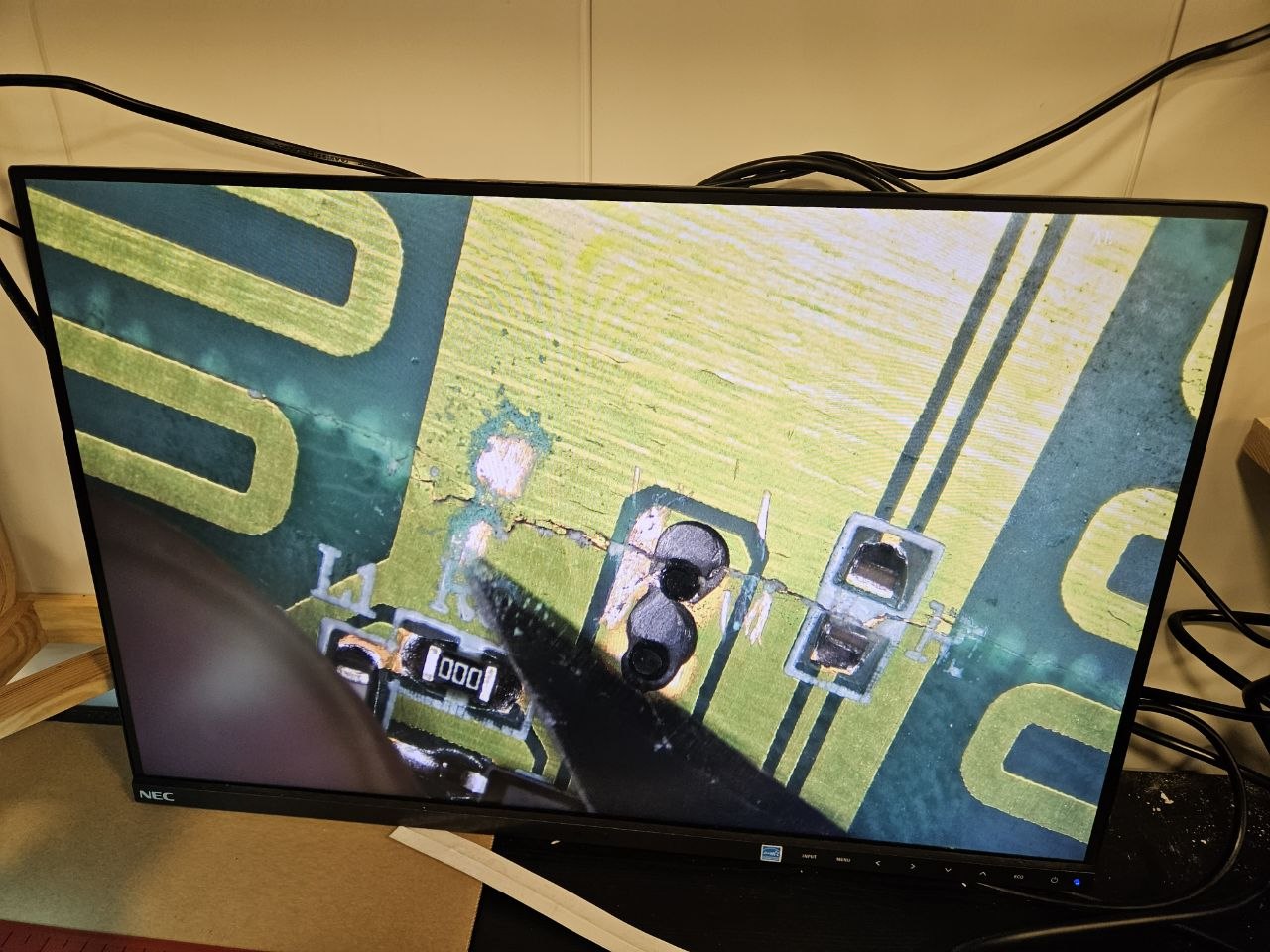
Fixing the walking-pad remote under the microscope.
Learning to solder
Start with Dave from EEVblog's soldering tutorial, then ask for hands-on help. There's a box with practice boards and components to learn on — ruin those, not your project.